
*This post may contain affiliate links for which I earn commissions.*
If grocery shopping feels overwhelming sometimes, you’re not alone. Between work, family needs, fluctuating energy, and all the shoulds we’re bombarded with about what to eat… it can start to feel like one more mental load.
But healthy eating after 40 doesn’t require perfect meal plans, a full Sunday of meal prep, or learning how to cook like a nutrition blogger. It simply requires some smart, simple systems that make nourishing yourself easier — not harder.
The goal here isn’t to shop like a wellness influencer.
The goal is to shop like a busy woman over 40 who wants more energy and less stress.
Today, I’ll walk you through time-saving grocery shopping strategies that make healthy eating feel realistic — even on busy weeks.
Start with Your “Core Foods” — Not Recipes
One of the biggest mistakes we make is starting with complicated recipes. They look inspiring… until you realize they require seven ingredients you don’t have.
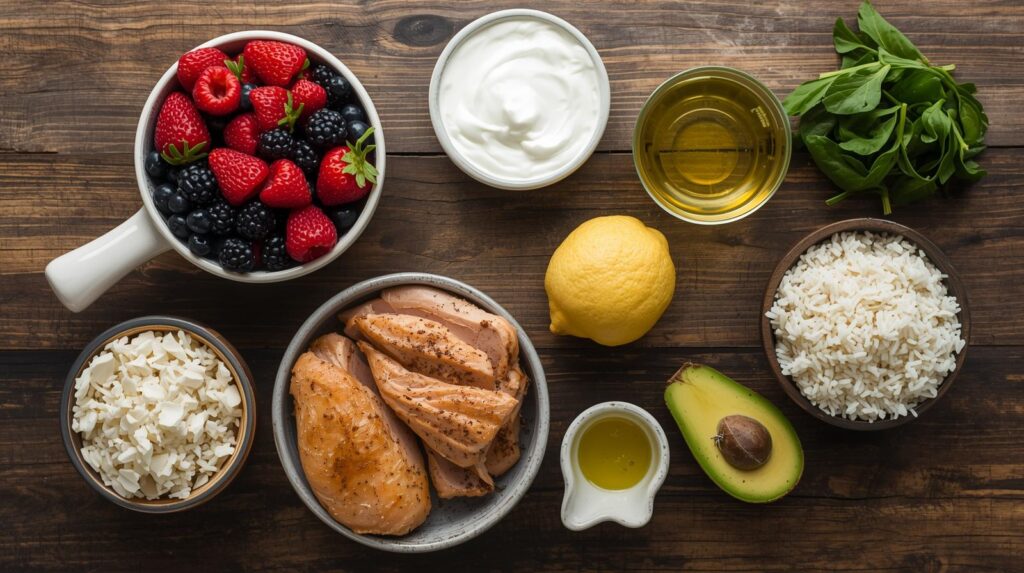
Instead, start with your core foods — the things you eat often and enjoy. Instead of starting with complicated recipes, focusing on core foods — especially protein — makes healthy eating far more sustainable in midlife, which I break down simply in Protein Made Simple.
I like to keep staples like this reusable produce storage set on hand to keep fruits and veggies fresh longer
Choose 2–3 of each:
- Proteins: chicken, salmon, eggs, Greek yogurt, tofu, lean beef
- Carbs: rice, potatoes, quinoa, oats, whole-grain bread
- Healthy fats: olive oil, avocado, nuts, seeds
- Veggies: spinach, peppers, broccoli, carrots, cucumbers
- Fruit: berries, apples, bananas, citrus
This becomes your weekly foundation.
For years, I tried meal planning recipes from Pinterest… I would get so stressed because each recipe asked for a huge list of ingredients which just made it harder to track. I finally decided to just stick to the “basics” every week. Suddenly, it was much easier to make meals and to throw something together quickly, and grocery shopping stopped feeling like a guessing game.
Shop Perimeter First, Then Fill the Gaps
You’ve probably heard that “the healthy food is on the perimeter of the store” — and there’s truth to that. The perimeter holds most of the fresh protein, produce, and whole foods.
Here’s the order that saves the most time:
- Produce
- Protein
- Dairy and eggs
- Pantry staples
- Frozen
This prevents wandering, overspending, and feeling overwhelmed.
Pro Tip:
If you shop in the same store, walk the store in the same order every week.
This builds muscle memory, which reduces decision fatigue (which matters more than ever in midlife). Reducing decision fatigue is one of the simplest ways to support your metabolism after 40 — especially when you understand what actually changes in midlife and what doesn’t, which I explain in The Midlife Metabolism Myth.
I have found this to be so helpful and it makes my grocery shopping so much more efficient.
Use Time-Saving Foods Without Guilt
You do not have to chop every carrot or roast a full tray of vegetables to be healthy.
Let convenience support you.
Easy time-savers:
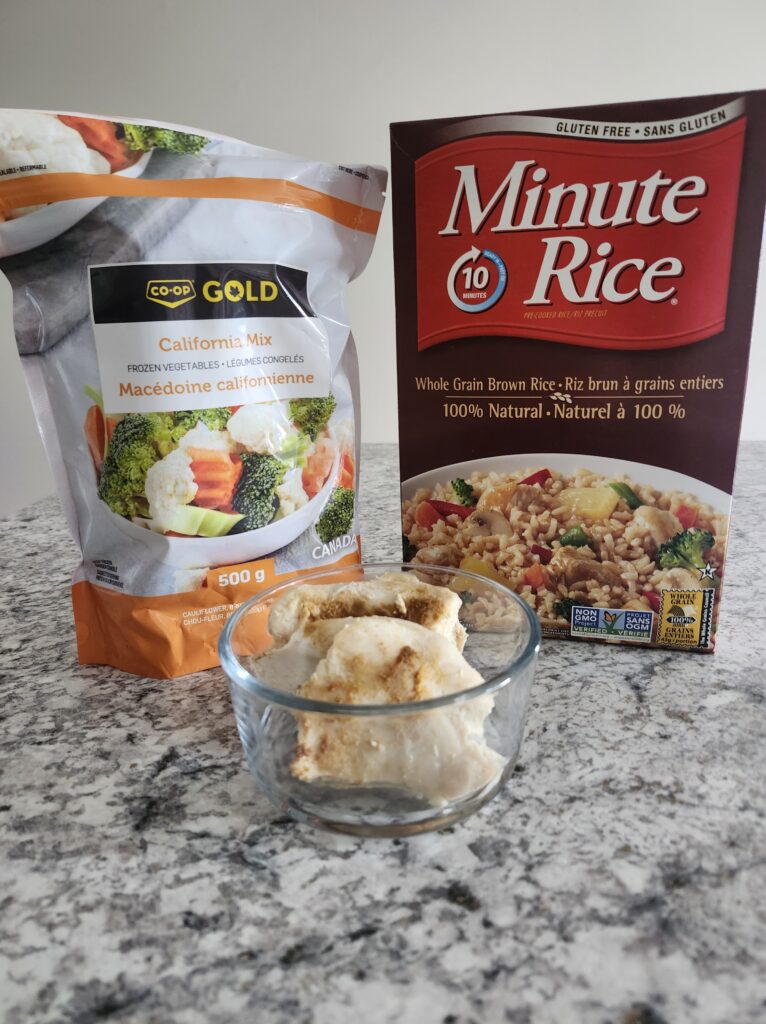
- Pre-chopped or frozen vegetables
- Microwaveable rice or quinoa
- Rotisserie chicken
- Bagged salad kits
- Pre-washed spinach
- Pre-cooked lentils or beans
Microwaveable grains like these 90-second quinoa or rice packs or the 10 minute rice have saved me so much time on busy nights.”
Frozen vegetables are just as nutritious as fresh — sometimes more, since they’re frozen at peak ripeness.
I, for the longest time, thought fresh vegetables were better than frozen. Once I realized frozen was just as beneficial I began to buy a variety of frozen vegetables. Let me tell you, this has saved me so much time and money. Don’t be afraid of the frozen vegetables.
Keep a Running Pantry & Freezer List
This one step prevents:
- Buying duplicates
- Forgetting staples
- Last-minute chaotic grocery runs
You can:
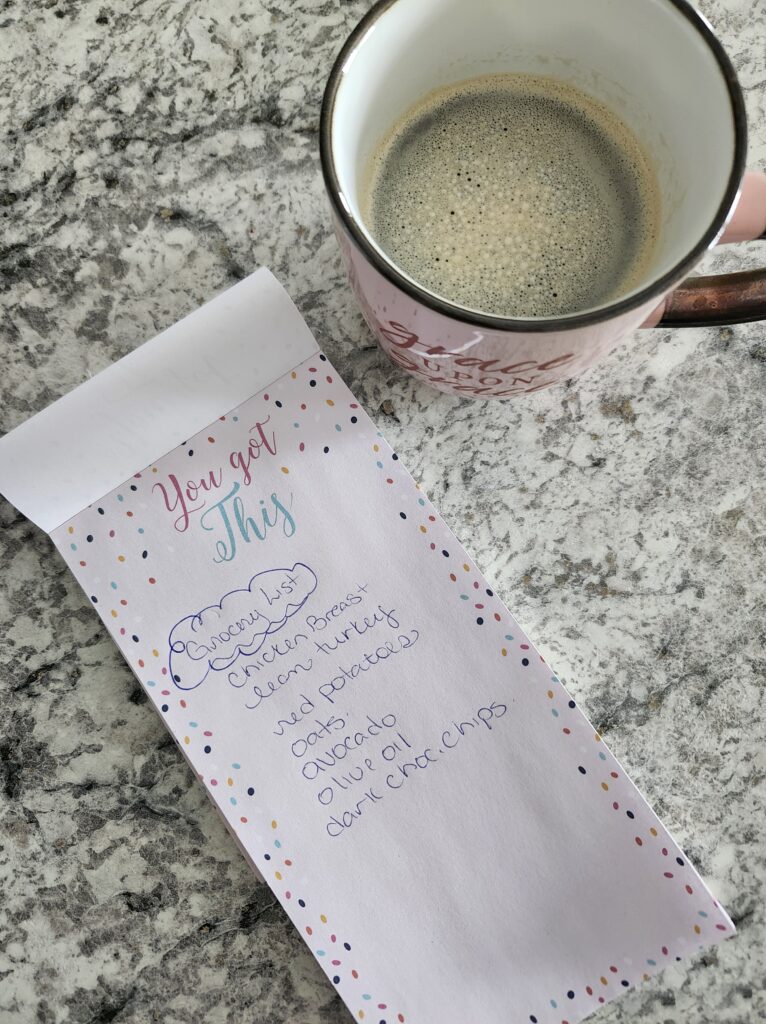
- Keep a whiteboard on the freezer
- Use the Notes app on your phone
- Keep a magnet list on the fridge
Whenever you run out of something, add it immediately.
No memory required.
This one is so simple and yet overlooked. Once you keep a list handy and keep a running list of things you need as you run out grocery shopping becomes much faster, cheaper and more efficient. It also makes cooking less stressful because you actually have what you need.
A Simple Grocery Shopping Routine (Copy This!)
Step 1: Check your schedule
Busy week? Keep meals simple.
Slow week? Try one new thing.
Step 2: Make a quick meal “outline”
Not recipes — just ideas:
- Tacos
- Stir fry
- Yogurt + fruit bowls
- Salmon and potatoes
Step 3: Write a short grocery list from your Core Foods
5–8 items per category is enough.
Step 4: Shop in your familiar order
Don’t overthink it.
Step 5: Put things away in a way that makes them easy to use
Wash fruit, chop 1–2 veggies, or portion a little protein if you have 10 minutes.
That’s it.
Not a full meal prep day — just making the next decision easier.
These are worth considering if they make life easier:
| Item | Why It Helps |
| Reusable glass containers | Makes storing leftovers and grab-and-go meals easier |
| A simple meal planning pad or app | Keeps grocery lists quick and consistent |
| Protein powder you enjoy | Helps you hit protein goals on busy mornings |
| Frozen veggie mixes | No prep, no washing, cooks in minutes |
No need to overhaul all at once — add one tool when you’re ready.
Grocery Essentials I Recommend



Optimum Nutrition Gold Standard 100% Whey Protein Powder, Extreme Milk Chocolate
Grocery Shopping Can Support You — Not Stress You
You don’t have to shop perfectly.
You don’t have to cook elaborate meals.
You don’t need to change everything at once.
Your grocery cart is just one small way you care for your future self.
Start with:
- Your core foods
- A simple store routine
- A few supportive shortcuts
And let healthy eating become something that fits your life — not something you have to reorganize your life to achieve.
You deserve meals that nourish your body and your energy — without stress.