
*This post may contain affiliate links for which I earn commissions.*
Winter changes everything and that includes how your body feels when you move. If you’ve noticed your knees creak a little more on cold mornings or your hips take their time “waking up,” you are definitely not the only woman in her 40s feeling it.
Hormonal shifts, less collagen, and the natural changes that come with perimenopause can make cold joints feel stiffer than they used to. And while it’s tempting to skip the warm-up to save time (especially when you’re juggling work, family, and a never-ending to-do list), winter is the one season you truly can’t afford to rush.
The good news? A solid winter warm-up doesn’t have to be long, complicated, or athletic. With the right steps, you can feel looser, warmer, and more energized before you even start your workout and reduce the chances of nagging aches stealing your motivation.
Here’s how to warm up properly in winter so your midlife joints feel supported, steady, and ready to move.
Why Winter Warm-Ups Matter More After 40
As we age, our tissues naturally become less elastic. Add in colder temperatures and you’ve got a perfect recipe for tight hamstrings, cranky knees, and a core that feels “asleep” when you start strength training.
A few things happen in your 40s that make winter warm-ups extra important:
- Blood flow moves more slowly to your extremities in cold weather, making muscles feel tighter at the start.
- Joints rely on movement to lubricate, and stiff mornings are even stiffer in winter.
- Hormonal shifts (especially during perimenopause) can contribute to inflammation and reduced mobility.
- Busy schedules often mean rushing into workouts without easing your body into movement first.
A thoughtful warm-up gets your blood flowing, activates your core and glutes, and creates heat in your joints so your movements feel smoother and safer.
Start Warmer – Don’t Begin Cold
The biggest mistake many women make in winter? Starting cold.
If you’re stepping into your basement gym or heading out for a walk straight from the couch, your body is working twice as hard to ramp up circulation.
A few easy ways to “pre-warm” before you even begin:
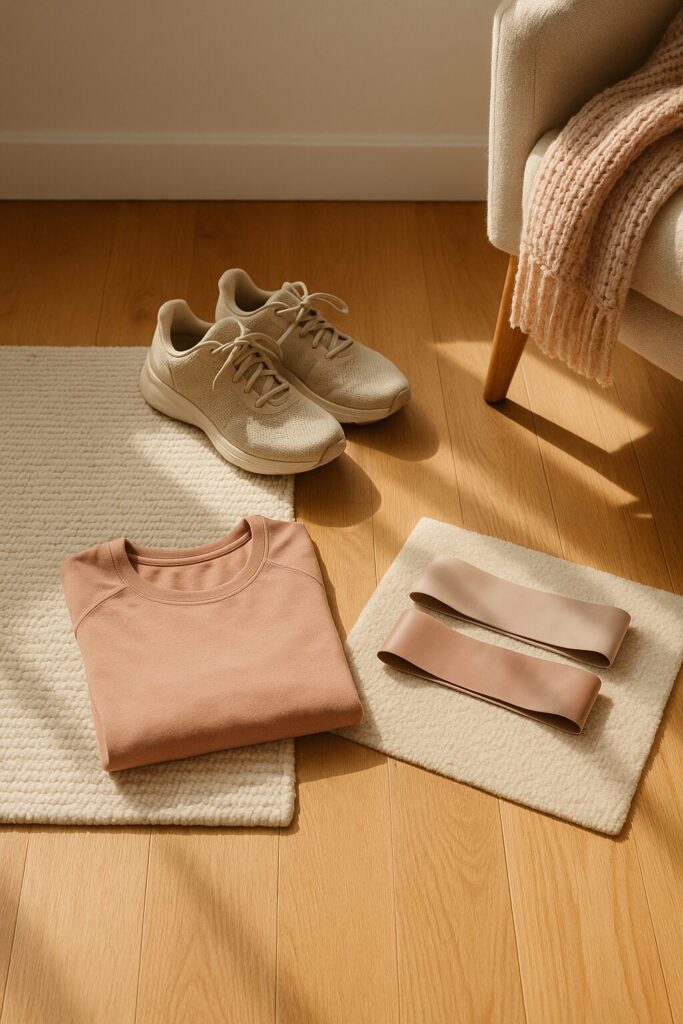
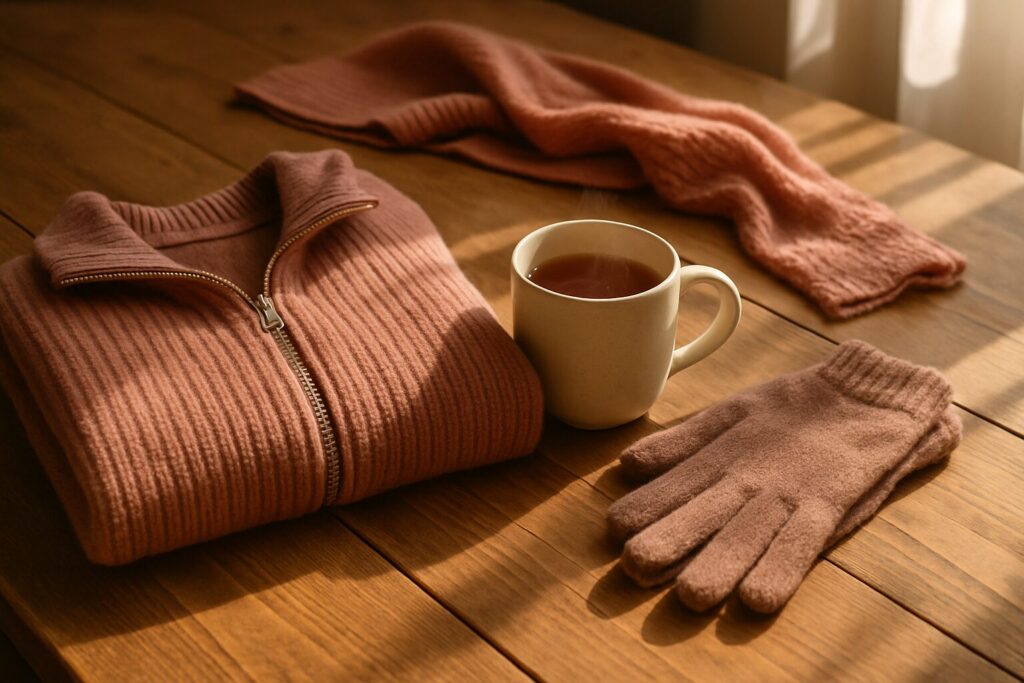
- Put on a warm layer (light fleece, zip-up, or long sleeve) instead of starting in your workout tank.
- Sip something warm – even half a mug of tea helps your core temp rise slightly.
- Move around your home for 2–3 minutes: unload the dryer, walk up the stairs, tidy the kitchen. It all counts.
Simple things like this give your muscles a head start so the rest of your warm-up can do its job.
If you often feel chilled at the start of your workouts, a lightweight thermal top or warm-but-breathable zip-up can make a big difference. Choose one that feels comfortable enough to start your workout in but easy to remove once you warm up.

Use Dynamic (Not Static) Warm-Up Movements
Static stretching (holding a stretch) has its place, but not at the beginning of a winter workout. You want to move, not hold.
Dynamic warm-ups help your muscles wake up and gradually increase your range of motion. They also warm your joints and activate your stabilizing muscles, which is especially important for women 40+.
Some great dynamic moves:
- March in place with high knees
Great for circulation and gently strengthening hip flexors. - Arm circles and shoulder rolls
Perfect for desk workers whose upper body stiffens throughout the day. - Hip circles or hula-style rotations
Loosen tight hips and activate your core. - Walking lunges or step-back lunges
Warm up quads, hamstrings, and glutes all at once. (Keep the range small if you’re stiff.) - Cat-cow flows
Helps your spine and shoulders feel more mobile.
These movements mimic what you’ll be doing in your workout which is exactly what your warm-up should do.
Wake Up Your Core and Glutes (They Slow Down in the Cold)
Glutes and core muscles tend to “go offline” when you’re cold. This isn’t just a winter thing. Many women in midlife already struggle with glute activation because of long work hours, sitting more, or hormonal shifts that affect connective tissue.
Why this matters:
When your glutes and core aren’t ready, your knees, hips, and lower back take on the work. That’s where joint aches often begin.
Spend 2–3 minutes waking them up:
- Glute bridges (10–15 reps)
Press through your heels and squeeze gently at the top. - Mini-band lateral steps (15 steps each side)
Great hip activation without strain. - Bird dogs (8–10 per side)
Builds core stability and improves balance. - Standing kickbacks (10–12 per leg)
Hold onto a chair if needed – this is a simple and effective way to “turn on” your glutes.
These movements make your lower body feel firmer, steadier, and more supported during strength training or winter walks.
Add Light Cardio to Build Heat From the Inside
To truly warm up your joints in winter, you need to increase circulation and the best way is gentle cardio.
Aim for 2–4 minutes of one of these:
- Brisk marching
- Slow jogging in place
- Step-touch side to side
- Light jump rope (real rope or invisible)
- A quick walk on the treadmill
You’re not trying to break a sweat yet. You’re trying to feel warm and achieve looser shoulders, easier breath, less stiffness in your hips.
This step is especially helpful if you’ve had a long day at your desk and need to transition from “stuck in one position” to “ready to move.”
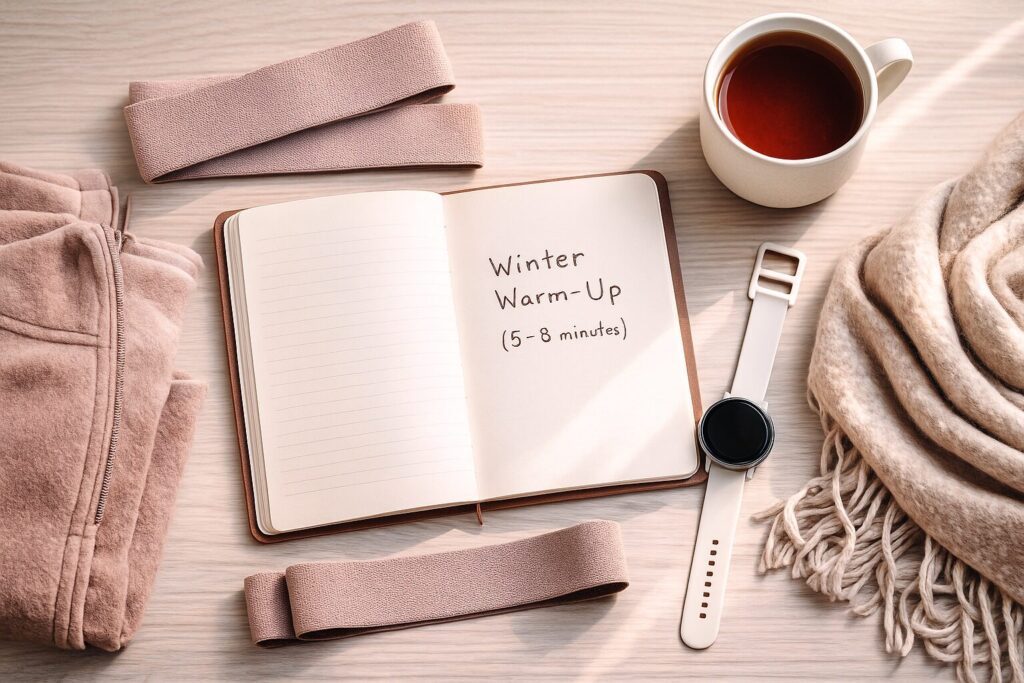
Your Simple Winter Warm-Up Routine (5–8 Minutes Total)
Here’s a routine you can save and use any time your joints feel tight:
1. Pre-Warm (1 minute)
- Put on a warm layer
- March around the house or climb the stairs for 30–60 seconds
2. Dynamic Warm-Up (2 minutes)
- 20–30 seconds each: arm circles, hip circles, high knees, step-back lunges
3. Glute + Core Activation (2 minutes)
- 10 glute bridges
- 10 bird dogs per side
- 10–12 standing kickbacks per leg
4. Gentle Cardio (1–2 minutes)
- March, jog lightly in place, or treadmill walk
That’s it – short, effective, and perfect for busy women who don’t have time for a 15-minute routine.
Optional Gear That Helps on Cold Days
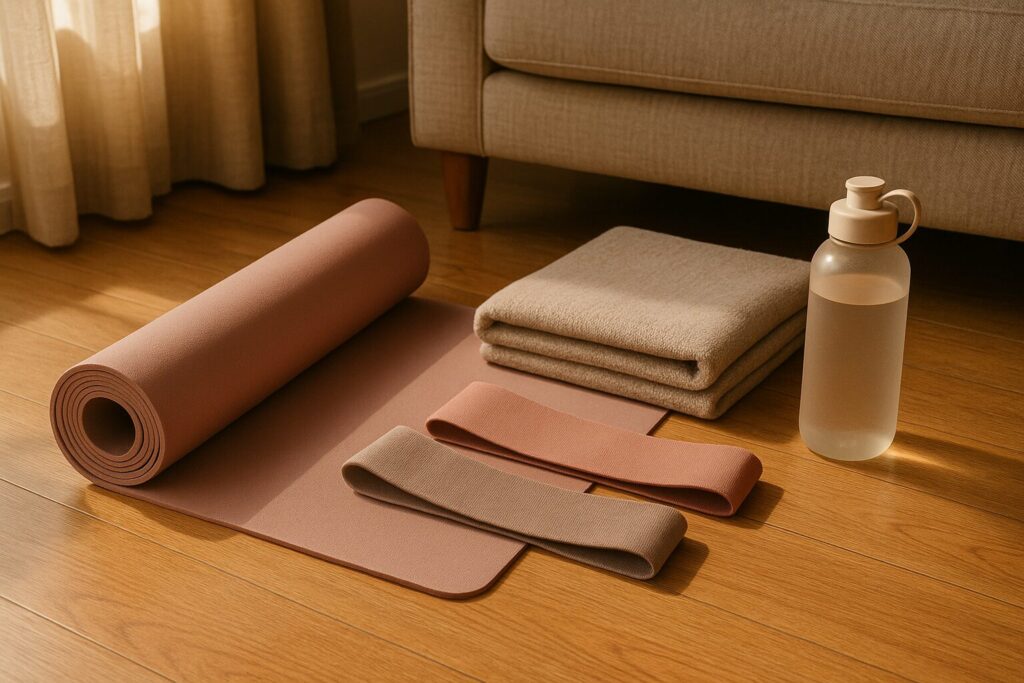
These aren’t “musts,” but they can make winter workouts more comfortable and consistent:
- Fabric mini resistance bands (for glute activation)
- A warm, breathable layer you can wear into your warm-up
- A simple foam roller to loosen stiff calves or quads before you start
- A water bottle with a flip lid because hydration matters even in winter
Always choose what genuinely supports you, not what makes things more complicated.




Owala Stainless Steel Water Bottle with Straw
Your Joints Deserve the Extra Care
If winter makes your body feel older than your age, you’re not imagining it. Colder weather slows everything down. But with a warm-up that respects your midlife body, movement can feel good again.
You don’t need to be perfect. You don’t need a flawless routine. You just need a few intentional minutes to help your joints wake up, your muscles activate, and your energy rise.
Every warm-up is a small act of care toward the future you who feels strong, steady, and confident in her body even through the coldest months.