
*This post may contain affiliate links for which I earn commissions.*
If you’ve hit your 40s and suddenly sleep feels like a nightly guessing game — you’re not alone. One week, you’re fine. The next, you’re staring at the ceiling at 2 a.m., sweating through your sheets, wondering what happened to the deep, restful sleep you used to take for granted.
Perimenopause brings a swirl of hormonal shifts that can make rest unpredictable. Hot flashes, night sweats, anxiety, and midlife stress all collide, leaving you exhausted before your day even starts. And when you’re juggling family, work, and the million little things that keep life running — sleep deprivation hits hard.
The good news? You don’t have to overhaul your entire life to sleep better. A few small, consistent changes can make a big difference — helping you fall asleep faster, stay asleep longer, and wake up with more energy (without adding another “perfect routine” to your already full plate).

Calm Your Nervous System Before Bed
As we move through perimenopause, our nervous system becomes more sensitive to stress. Cortisol (your stress hormone) can stay elevated longer, which keeps your body in a “wired but tired” state — even when you want to sleep.
The first step to better rest is teaching your body how to shift from go mode to slow mode.
Here’s what helps:
- Create a wind-down cue. Choose one signal that tells your body it’s time to relax — like dimming the lights, diffusing lavender oil, or making a cup of caffeine-free tea.
- Try the 10-minute transition. Spend the last 10 minutes before bed doing something calm and screen-free: light stretching, reading, or journaling.
- Breathe intentionally. Slow, deep breathing lowers your heart rate and helps release physical tension. Try inhaling for 4 seconds, exhaling for 6.
I use to mindlessly scroll my phone thinking it would help me “wind down.” Only to realize it kept me awake. I have slowly begun to replace mindless scrolling with reading a book or doing my bible study at night before bed. Another one of my favorite ways to wind down is using a lavender essential oil diffuser. It instantly makes the room feel calmer.
A good caffeine-free bedtime tea can also make a huge difference. Since starting this I have noticed falling asleep faster and waking up feeling less tense in the morning.
Cool Down Your Environment (and Your Body)
Hot flashes and night sweats can wreck even the best bedtime routine. The truth is, body temperature plays a big role in sleep quality — and even a small rise can keep you from reaching deep, restorative rest.
Quick Fixes That Work:

- Keep your bedroom between 60–67°F (15–19°C). Cooler temps signal your body it’s time to sleep.
- Swap your bedding. Lightweight, breathable fabrics like bamboo or moisture-wicking sheets are worth the investment.
- Layer smartly. Instead of heavy blankets, try multiple thin ones you can toss off easily during the night.
- Stay hydrated (but not too late). Dehydration can trigger more intense night sweats — aim to drink plenty of water earlier in the day, and cut off an hour before bed.
I have for a long time slept with my window open just a crack. Where I live it can get very cold in the winters. I never realized how important this cool air/temperature was for sleeping. Now when I forget the odd night to crack my window open I really do notice how it affects my sleep. This has really been a game changer for me and I didn’t even realize it at first.
Support Your Sleep Hormones Naturally
Melatonin and progesterone — two hormones that help regulate your sleep cycle — tend to drop during perimenopause. That’s part of why you might find yourself wide awake in the middle of the night for no apparent reason.
You can gently support your body’s natural rhythms without medication:
- Get morning light. A few minutes of sunlight first thing helps your brain reset its sleep-wake cycle.
- Keep consistent bed and wake times. Even on weekends, your body thrives on rhythm.
- Watch caffeine timing. After 2 p.m., swap coffee for herbal teas or decaf alternatives. You can also try a gentle magnesium glycinate supplement to support deeper relaxation before bed.
- Eat balanced meals. Blood sugar swings can affect cortisol, which affects sleep. Include protein, fiber, and healthy fats at each meal.
I have come to appreciate keeping a consistent bed time and wake times. I do so much better when I stick to this routine. As soon as I have a day where I go to bed later than normal my body can tell and it does dictate what kind of day I have. My bedtime routine is one of my most important routines I try to stick to consistently. It is THAT important!
Create a Consistent Sleep-Friendly Routine
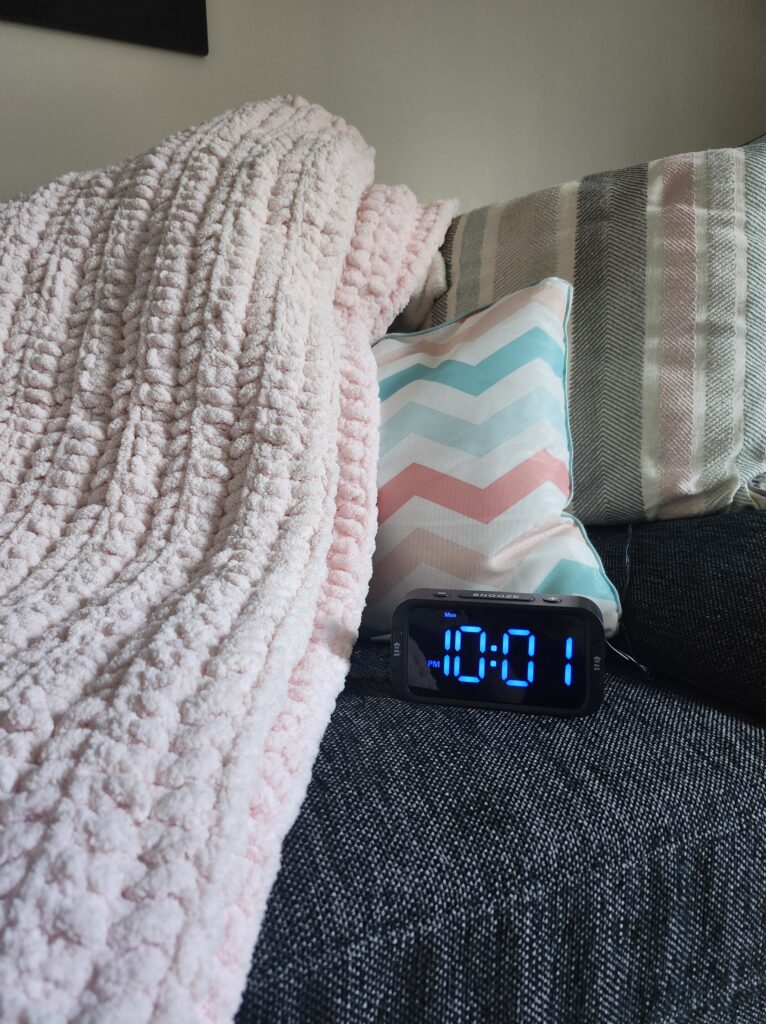
The real secret to sleeping well in your 40s isn’t perfection — it’s consistency. When your body knows what to expect, it can relax more easily.
Here’s a simple 10-minute bedtime framework you can try tonight:
- Turn off screens (yes, even that last scroll).
- Dim the lights to signal your body that it’s nighttime.
- Do one calming action: stretch, journal, or read a light book.
- Sip a relaxing drink — chamomile, lemon balm, or magnesium tea.
- Lower the room temperature.
- Set an intention for tomorrow. Something small like, “I’ll move my body for 10 minutes” or “I’ll take my vitamins.”
You don’t have to do it all at once — just start with one change and build from there.
My Bedtime Essentials

Nature Made Magnesium Glycinate


UpNature Lavender Essential Oil Pure Roll On


Night Light, Dimmable Touch Lamp for Bedroom
Small Tweaks, Real Results
If there’s one thing I’ve learned in my 40s, it’s that better sleep doesn’t come from chasing perfection — it comes from consistency, compassion, and learning to listen to your body again.
You don’t need an expensive routine or a complete lifestyle overhaul. Start with what feels doable — like cooling your room, dimming the lights, or setting aside 10 minutes to unwind. Each small change adds up.
And when you start waking up feeling more refreshed, even just a few mornings a week — that’s progress worth celebrating.