
*This post may contain affiliate links for which I earn commissions.*
If you’ve ever found yourself staring into the pantry at 3 p.m., wondering what you can eat that won’t completely derail your day — you’re not alone.
After 40, our energy, hormones, and hunger cues all start to shift. The snacks that once kept you full suddenly leave you crashing an hour later. Or maybe you’re skipping snacks altogether, only to end up hangry by dinner.
The truth is, snacking isn’t the problem. It’s how and what we snack on that makes the difference. Smart snacking after 40 isn’t about cutting out food — it’s about choosing the right kinds of fuel to keep your blood sugar steady, your energy stable, and your mind clear.
In this post, you’ll learn how to build snacks that actually satisfy you, support your hormones, and fit into a busy midlife schedule — without guilt or overthinking every calorie.
Why Smart Snacking Matters More in Midlife
During your 40s and 50s, hormonal fluctuations can affect hunger, satiety, and energy levels. Estrogen helps regulate how your body stores fat and uses carbs for energy — and when it begins to dip during perimenopause, your blood sugar may fluctuate more easily. That’s why snacks that once worked (like crackers or granola bars) can now send you on a rollercoaster of energy spikes and crashes.
The goal isn’t to avoid snacking — it’s to snack strategically. The right combination of protein, fiber, and healthy fats can help stabilize your energy, prevent overeating later, and even support lean muscle maintenance.
This is a habit I am working on as It is so easy to grab some crackers or a cookie when it is better to grab some protein, fiber and a healthy fat in each snack.
The Anatomy of a Smart Snack
Think of a smart snack as a “mini meal” that balances three key nutrients — something I break down more simply in Protein Made Simple if you’ve ever felt overwhelmed by what your body actually needs at this stage of life.
- Protein: Keeps you full and supports muscle maintenance.
- Fiber: Helps regulate blood sugar and digestion.
- Healthy fats: Keep you satisfied and reduce cravings.
When these three show up together, you’ll feel full for longer — and less tempted to grab a quick sugar fix.
Here are a few simple, go-to combinations that fit the bill:
- Apple slices + almond butter
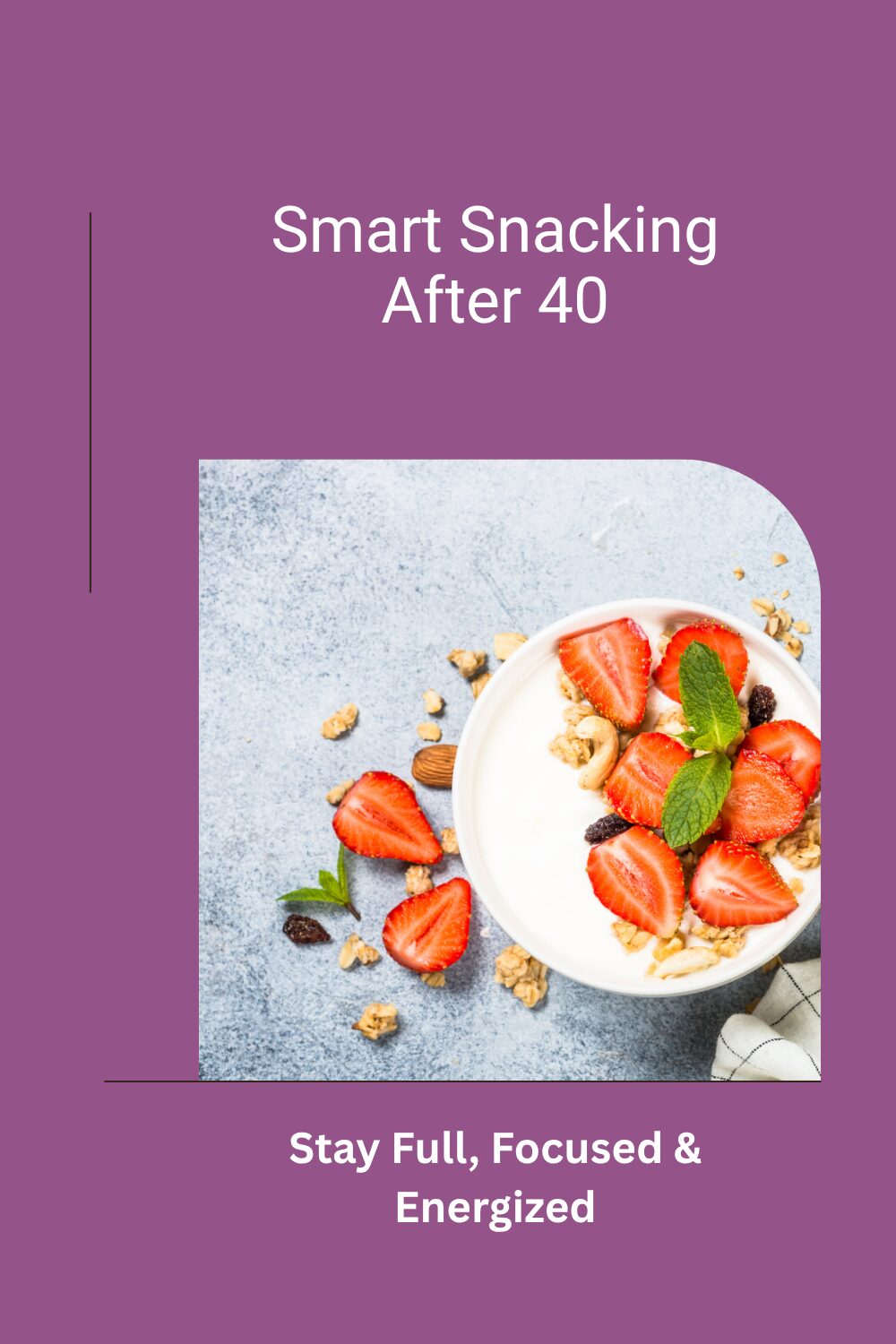
- Greek yogurt + berries + chia seeds
- Hard-boiled egg + handful of baby carrots
- Cottage cheese + sliced peaches
- Tuna with whole-grain crackers
These are all really easy to prepare and have on hand. They give you all those macros your body is needing in this phase of life.
One of my favourite quick snacks is Cottage cheese and fruit that is in season. It is so good and satisfying.
Avoiding the “Snack Trap”
Let’s be honest — not all snacking is hunger-based. Sometimes it’s boredom, stress, or habit. We reach for food as a quick comfort or a distraction (especially mid-afternoon or late at night).
The trick is to pause and ask yourself one simple question:
“Am I actually hungry, or do I just need a break?”
If you’re genuinely hungry, honor that and choose something nourishing. But if it’s stress or fatigue, try another form of “reset” first — a quick walk, stretching, or a glass of water.
I had to learn this one the hard way, I often found myself opening my fridge and eating leftovers or picking at other goodies even though I’d eaten dinner hours earlier. It wasn’t hunger — it was mostly out of boredom Once I realized that, I started making tea or just drinking some water and finding something like – reading a book to take my mind off of the boredom.
If late-night hunger is real (and it often can be during perimenopause), go for something balanced like:
- A small bowl of cottage cheese with berries
- Turkey slices wrapped around avocado
- A banana with a spoonful of peanut butter
Snack Timing That Supports Energy (and Hormones)
When and how often you snack matters just as much as what you eat.
Here’s a simple way to structure your day:
- Mid-morning snack: About 2–3 hours after breakfast, especially if you’re active or had a light meal. Try Greek yogurt with fruit or a handful of nuts.
- Mid-afternoon snack: Between lunch and dinner, when most people experience an energy dip. Choose protein + fiber (like hummus and veggies). This is where I often struggle and often want to grab something quick, but try to keep a protein and fiber source around so its quick and easy.
- Evening snack (optional): If dinner was early or light, something small and protein-based can keep blood sugar stable overnight.
This rhythm helps prevent the “hangry” crash that leads to overeating later — and keeps your metabolism and hormones balanced.
A Simple Framework for Smart Snacking
If you take nothing else away from this post, let it be this: snacks should add stability, not stress.
Here’s a simple formula you can follow anytime you’re unsure what to eat:
Smart Snack = Protein + Fiber + (Optional) Healthy Fat
Try mixing and matching using this quick reference:
| Protein | Fiber | Healthy Fat |
| Greek yogurt | Berries | Chia seeds |
| Hard-boiled egg | Veggies | Avocado |
| Protein shake/Protein Bar | Spinach | Nut butter |
| Tuna pouch | Crackers | Olive oil drizzle |
| Cottage cheese | Apple slices | Nuts |
Prep a few options ahead on Sunday so they’re ready for the week — your future self will thank you.
These are the protein-packed snacks I always keep on hand to stay full and energized. They are easy to grab n’ go as well if you are running around.




Smart snacking after 40 isn’t about perfection — it’s about staying steady. When you listen to your body, choose balanced foods, and stop labeling snacks as “bad,” you’ll find it easier to stay full, focused, and in control.
Small changes, like adding more protein or prepping healthy options ahead, can make a huge difference in how you feel every day.
You don’t need to give up snacks — you just need to snack smarter.