
*This post may contain affiliate links for which I earn commissions.*
Have you ever finished a workout and thought, “Why do I feel more exhausted than energized?” You’re not alone.
So many women over 40 tell me the same thing — they’re doing “everything right” when it comes to exercise, but instead of feeling strong and confident, they feel sore, sluggish, or even burned out.
Here’s the truth: what worked for your body in your 20s or 30s doesn’t always work now. Between hormonal shifts, stress, and the daily demands of midlife, your energy needs a gentler kind of support — not more pushing and punishing.
In this post, let’s talk about why your workouts might be draining you — and how to make small, smart tweaks so you walk away from exercise feeling recharged, not run down.
You’re Treating Every Workout Like a Bootcamp
I used to think if I didn’t sweat buckets or wake up sore the next day, it didn’t “count.”
But over time, I noticed that those all-out sessions left me wiped for days. My motivation dipped, my sleep suffered, and I’d skip workouts altogether because I just didn’t have it in me.
Sound familiar?
High-intensity workouts have their place — but when every session is a max effort, your nervous system never truly recovers. Especially in perimenopause, when cortisol (your stress hormone) is already higher, that constant “go hard or go home” mentality can backfire.
What to do instead:
Alternate your intensity levels.
- Try strength training 2–3 times a week
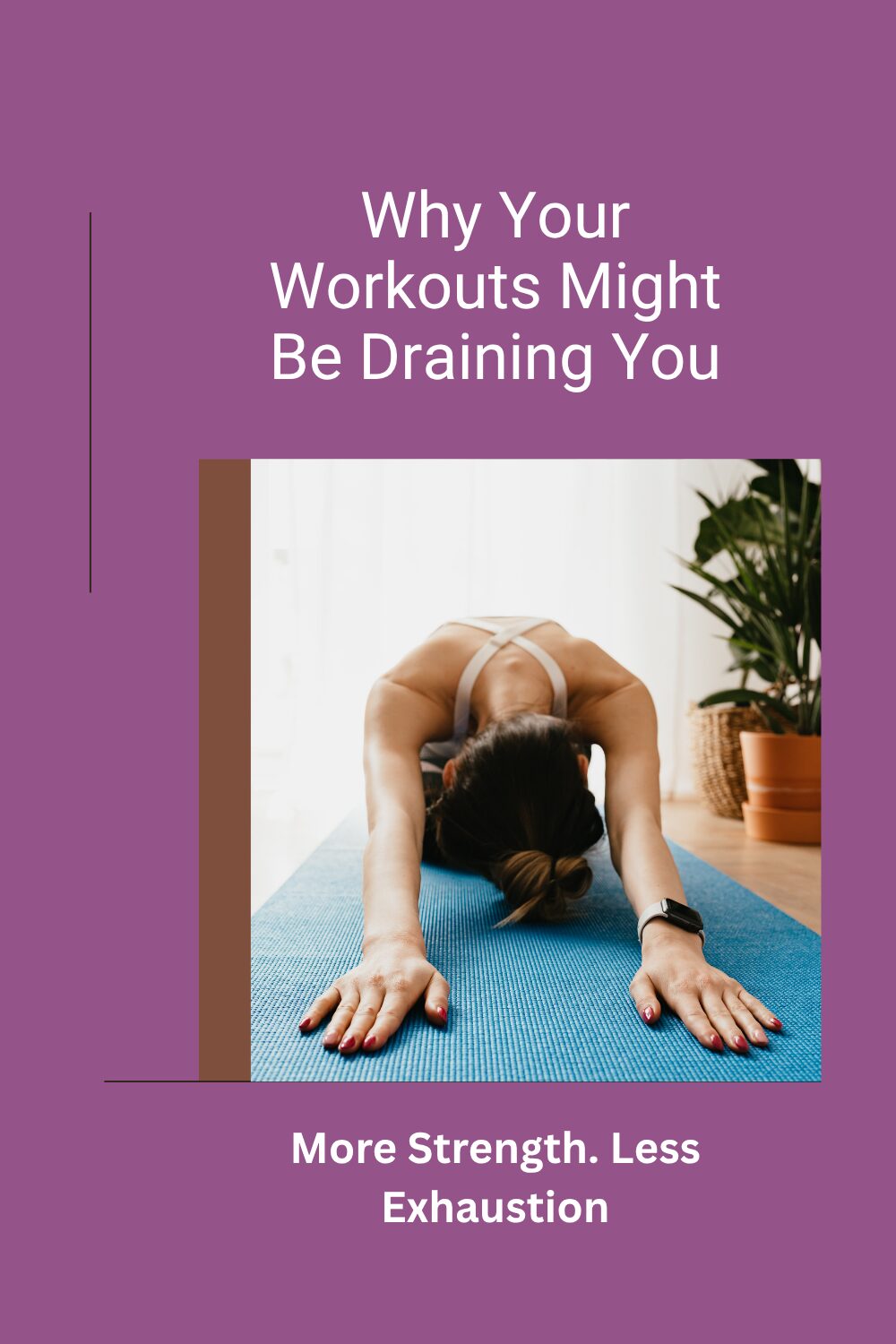
- Add one or two gentle movement days — like walking, yoga, or cycling
- Leave one full day for complete rest
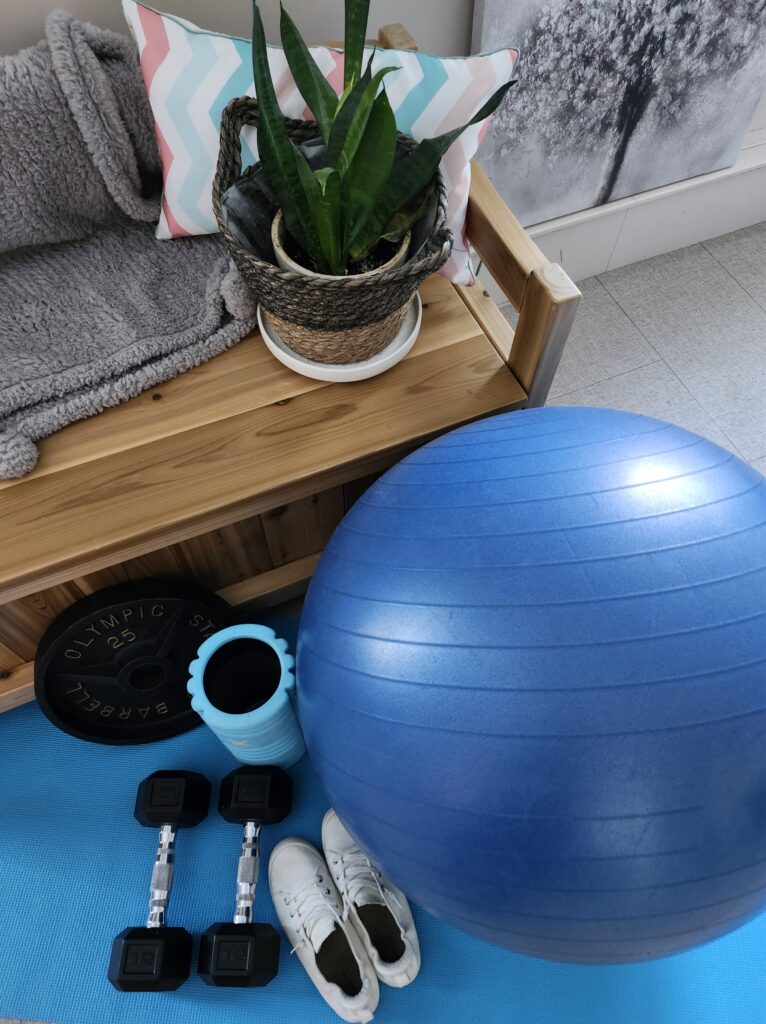
You’ll notice that your energy steadies, your sleep improves, and you actually want to work out again. You won’t feel like you have been hit by a train when you practice this. If you’re easing into lower-intensity days, tools like a good yoga mat and resistance bands can make your workouts feel supportive instead of stressful.
You’re Undereating for the Amount You’re Doing
Here’s something most women in midlife don’t realize: if you’re consistently tired after workouts, it’s often not your training — it’s your fueling.
When estrogen dips during perimenopause, your body becomes more sensitive to stress (including the stress of exercise). If you’re skipping meals, eating light, or not getting enough protein, your body can’t recover properly. The result? Fatigue, irritability, and that “running on fumes” feeling.
I learned this the hard way a few years ago when I decided to “clean up” my eating. I cut back too much and quickly found myself dizzy during workouts and ready for bed by 7 p.m. Once I added more balanced meals — especially breakfast with protein — my energy completely shifted. I can’t stress how important it is to fuel your body appropriately. Do not dismiss this.
Here’s a simple formula to remember:
Each meal should include:
- Protein (helps repair muscles and stabilize blood sugar)
- Fiber-rich carbs (for sustained energy)
- Healthy fats (for hormone support)
I still struggle with this off and on but have found a quick post-workout smoothie with protein powder, spinach, and frozen berries is one of my go-to energy resets helps out alot especially when I don’t really feel like eating after a workout.
If you struggle with protein after workouts, a clean protein powder or a simple shaker bottle makes recovery so much easier. I keep both ready for busy days.
You’re Not Prioritizing Recovery (And It’s Catching Up)

When life is busy, it’s easy to think, “I’ll rest later.”
But here’s the reality — recovery is where your body actually gets stronger. Without enough rest, your muscles don’t repair, your energy tanks, and motivation plummets.
Think of recovery as part of your training, not a reward for finishing it.
Some of my best breakthroughs in strength came when I finally started resting on purpose. I began scheduling recovery days the same way I scheduled workouts — a non-negotiable part of the plan. As hard as this is, please don’t disregard it as your body will notice.
Simple ways to recover better:
- Stretch or foam roll for 10 minutes before bed
- Take one active recovery day (like a slow walk or mobility flow)
- Prioritize 7–8 hours of sleep — your body’s best repair system
Helpful recovery supports:
• Foam roller for tight muscles
• Magnesium glycinate for deeper sleep and calmer recovery
• Massage balls for quick at-home tension relief
These are the recovery tools I personally use the most.
Your Hormones Are Changing — and Your Routine Should Too
If your workouts suddenly feel harder, it’s not in your head.
Fluctuating hormones during perimenopause affect everything from energy and mood to how your body handles stress and recovers from exercise.
That doesn’t mean you need to stop training — it means you need to train smarter.
Focus on quality over quantity:
- Prioritize strength training to protect bone and muscle mass
- Do shorter, focused workouts (30–40 minutes) instead of hour-long slogs. Remember even 20 minutes is better than nothing.
- Give your body extra time between high-intensity sessions
The goal isn’t to “do more.” It’s to do what helps your body thrive right now.
And if you’re unsure how to adapt your routine, track how you feel — your energy, sleep, and mood — and use that as your guide. Your body is constantly giving you feedback. A simple fitness tracker (like this one I use) can help you notice patterns in recovery, sleep, and stress so you know when to push and when to rest.
Your “Fix It” Framework: 5-Minute Workout Audit
Before your next workout week, take five minutes to ask yourself:
- Am I scheduling at least one full rest day?
- Do I have variety — strength, mobility, and recovery?
- Am I eating enough to support what I’m doing?
- How is my sleep?
- Do I finish workouts feeling better than when I started?
If you answered “no” to more than one, that’s your sign to scale back, not push harder. Small tweaks — not massive overhauls — will make the biggest difference long-term.
If you want to make your workouts feel supportive instead of draining, a few simple tools can help:
• Gentle resistance bands
• A cushioned yoga mat
• A fitness tracker
• Magnesium glycinate for deeper recovery
These are the tools I rely on most during busy, low-energy weeks.
Exercise Should Give Energy, Not Take It Away
You deserve workouts that leave you feeling strong, confident, and capable — not drained or defeated.
The best part? Fixing workout fatigue doesn’t mean doing less; it means doing smarter. Listening to your body. Feeding it well. Allowing rest.
When you make those shifts, everything changes — not just your workouts, but your overall sense of balance and well-being.So the next time you’re tempted to push through exhaustion, pause. Take a breath. Ask what your body needs most — movement, nourishment, or rest.
That’s the real secret to feeling confident after 40.